Kidney Stones
Kidney stones are hard masses that develop in the kidneys. They are formed by minerals and acid salts and can vary in size. These stones can occur due to various factors. Most commonly, kidney stones develop when the minerals crystallize and adhere together. This occurs when the urine gets too concentrated. The passage of a kidney stone causes a great deal of pain and discomfort. Pain is first experienced in the lower back or sides of the body.
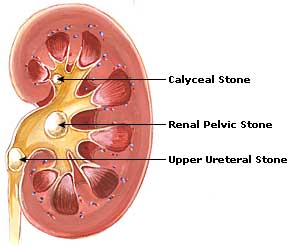
The pain may then move towards the abdomen and groin area as the stone passes through the urinary tract. Kidney stones do not lead to any permanent complications. Treatment usually involves the administration of pain relievers and an increased intake of water. When the condition is recurrent or severe it can be very serious and should be treated swiftly.
Symptoms of Kidney Stones
In many cases kidney stones do not produce any symptoms until they pass into the connecting tube between the kidneys and bladder. This tube is called the ureter. When this happens, certain signs and symptoms may develop. These include:
-
Pain in the lower back and sides
-
Pain that moves to the abdominal area and groin
-
Pain while urinating
-
Discoloration of the urine
-
Nausea
-
Vomiting
-
A constant urge to urinate
-
Fever
-
Chills
Fever and chills usually occur when there is an infection. It is important to seek quick medical attention in case the following symptoms occur:
-
Severe pain which makes it difficult to stay still
-
Persistent nausea and vomiting accompanied by pain
-
Fever, chills and increasing pain
Causes of Kidney Stones
There is often no single cause that contributes to the formation of a kidney stone. Many factors may combine and trigger the formation of stones in certain individuals. Kidney stones are composed of minerals and acids. They form when there is an imbalance in the levels of these minerals and acids. Under such circumstances the urine becomes concentrated with substances such as uric acid, oxalate and calcium. When the levels of any of these substances get too high they begin to crystallize forming what are referred to as kidney stones. Kidney stones can be classified into the following categories:
-
Calcium – Most kidney stones are composed of calcium oxalate deposits. Certain foods contain high levels of oxalate such as fruits, vegetables and nuts. Oxalate is also made by the liver. The levels of oxalate or calcium in the urine may increase due to high intake of vitamin D, certain metabolic diseases and intestinal bypass surgery.
-
Struvite - Kidney stones made of struvite develop due to infection. These stones can enlarge rapidly.
-
Uric Acid – Individuals who consume too many protein-rich foods, those affected by gout and those who are dehydrated may be at risk for developing uric acid stones.
-
Cystine – These stones are rare and occur due to a genetic condition in which the kidneys excrete high levels of certain amino acids.
Identifying the type of stone is important in determining the cause and also helps in preventing further occurrence of kidney stones.
There are some factors that can increase a person’s risk of developing kidney stones. These include:
-
Hereditary factors
-
Adulthood
-
Male gender
-
Dehydration
-
Diet that is high in protein, sodium or sugar
-
Obesity
-
Diseases that affect the digestive system
-
Gastric surgery
-
Certain medical conditions such as urinary tract infections and cystinuria
Remedies for Kidney Stones
The treatment for kidney stones depends on the causes behind the condition and most importantly upon the composition of the stones. In case of smaller stones, treatment may involve increasing your intake of water to help flush out the stone. Pain medications may also be prescribed to alleviate the symptoms. In case of larger stones, treatment may have to be more invasive. Procedures may include the use of sound waves to disintegrate the stones and as a last resort surgery may be used to remove large stones. There are also some natural remedies for kidney stones, but many of these remedies simply remain speculative. While some remedies have been validated through the scientific process many others have been completely discredited, while still more have never been investigated. For this reason it is advisable that you consult your doctor before trying any of these remedies. Some of the common natural cures for kidney stones include:
-
Holy basil is often referred to as one of the best home remedies for kidney stone pain. Extract the juice from holy basil leaves and mix with a teaspoon of honey. Consume a teaspoon of this juice daily for a period of six months.
-
Soak a few kidney beans in water and keep overnight. The next morning, cut the beans and boil in about four liters of water. You need to continue boiling for about six hours. Then strain the liquid and let it cool. Filter it once more and drink one glass after every couple of hours. This is known to be one of the most effective home remedies for kidney stone removal.
-
Consume celery regularly to prevent the occurrence of kidney stones. Celery also helps to remove existing stones.
-
Apples are also said to be an effective kidney stones home remedy. You are less likely to develop stones if you eat apples regularly.
-
Powder some pomegranate seeds and prepare a paste by adding a small amount of water. Add one teaspoon of the paste to gram soup and consume.
-
Increase your intake of water and other fluids. Try to drink at least eight glasses of water daily. You can also drink other beverages, but avoid anything that contains alcohol or caffeine.
-
You can keep a check on your fluid intake by measuring your urine output. There are certain devices which can be fitted into the toilet bowl. You will be able to find these at pharmacies. Your normal urine output should be about 40 to 45 ounces daily.
-
Exercise is an ideal kidney stone treatment at home. Regular exercise facilitates better absorption of calcium in the bloodstream.
-
Regulate your intake of foods that contain high levels of oxalate.
-
If you are susceptible to calcium oxalate stones, restrict consumption of foods such as nuts, spinach, peanuts, wheat bran, tea and rhubarb. But consult your doctor before making any changes to your diet.
-
Foods that contain animal protein can contribute to the formation of uric acid stones. Therefore it is best to restrict the intake of red meats.
-
If you are prone to developing uric acid stones, also restrict your intake of foods that contain high amounts of purines such as fish roe, shrimps, sweetbreads and wine.
-
If the kidney stones are the result of calcium deposits you may need to avoid or reduce your intake of medications containing calcium or any calcium supplements.
-
Reduce your intake of salt as it elevates the levels of calcium in the urine. The daily sodium intake should be just two to three grams. Therefore avoid foods such as chips, sauces, luncheon meats and other snack foods.
-
Add the juice of two lemons to three tablespoons of olive oil and drink before meals. You can also add horsetail tincture to the oil instead of lemon juice. This will help to alleviate nausea and vomiting.
Diet for Kidney Stones
The following foods are believed to help in the treatment and prevention of kidney stones:
-
Food that is rich in fiber helps to eliminate excess calcium and oxalate from the urine. You can obtain fiber from foods such as bran flakes.
-
Carrots contain vitamin A which is beneficial for the health of the kidneys. Other foods rich in vitamin A include pumpkin and sweet potatoes.
-
Chicken is an excellent source of the B vitamins which are helpful in preventing kidney stones. These vitamins restrict oxalate buildup in the body. Vitamin B6 especially helps to reduce oxalate levels in the blood. Your doctor may also recommend taking a supplement of vitamin B6.
Before you decide to make any changes to your diet, do consult your doctor however. It would in fact be best to formulate a personalized diet plan with your health care provider and a nutritionist, as dietary modifications are crucial to the outcome, and are entirely dependent on the nature of the kidney stone problem.
Suggestion for Kidney Stones
Some doctors advise individuals with kidney stones to use a mesh strainer while urinating. This will help to catch the stone and enable your doctor to analyze it. This is very helpful in determining the type of stone and will enable your doctor to decide on the best course of treatment.
References
-
Tiziana Meschi, Antonio Nouvenne, Loris Borghi, Lifestyle Recommendations to Reduce the Risk of Kidney Stones, Urologic Clinics of North America, Volume 38, Issue 3, August 2011, Pages 313-320, ISSN 0094-0143, 10.1016/j.ucl.2011.04.002.
-
David S. Goldfarb, Fredric L. Coe, Beverages, diet, and prevention of kidney stones, American Journal of Kidney Diseases, Volume 33, Issue 2, February 1999, Pages 398-400, ISSN 0272-6386, 10.1016/S0272-6386(99)70319-7.
Kidney Stones Treatments - more information
Kidney Stones - Frequently asked questions
15 Kidney Stones remedies suggested by our users
Remedy
suggested by matt on Tuesday, June 10, 2008
Palmetto Extract
suggested by Bill on Saturday, January 19, 2008
Solution
suggested by Larry on Thursday, July 26, 2007
coke and asparagus
suggested by Christina on Tuesday, June 19, 2007
Kidney Stones Treatments. More...
Coke, Asparagus, Olive oil, What ever its all a joke don't believe the only thing to fix a stone is citrus (lemon, orange, grapefruit, etc.) coke and soda is the worst thing you can drink also milk, don’t drink or eat calcium filled things. Lemon juice! I had 16 stones about 3 months of pain I know and no matter what anyone says do your thing(pain sucks) lay down it don’t help but its better than falling down.