GINGER HELPS
suggested by karen on Thursday, January 15, 2009
Eczema is a chronic skin condition that can be caused by a number of different factors both internal and external. Eczema tends to affect children below the age of six primarily, but many people may suffer from recurring bouts of eczema throughout their lives. Eczema is an inflammatory condition but is not contagious and cannot be caught or transferred from one person to another. If left untreated, eczema can develop into more serious skin diseases such as herpes and impetigo.
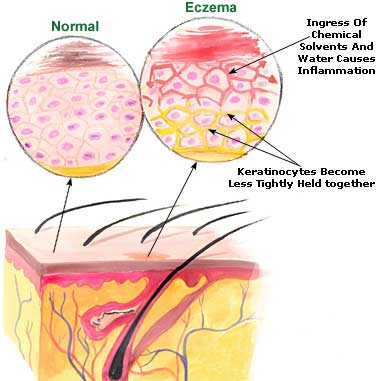
There are different types of eczema that vary in terms of causes and symptoms. The most common type of eczema is also referred to as atopic dermatitis. In fact, these two terms are often used interchangeably. Atopic dermatitis is caused by external factors and causes scratchy inflamed red patches of skin. These attacks flare up depending on allergens and other environmental factors. Contact dermatitis or eczema is caused when the skin comes in contact with a particular allergen or irritant. Contact eczema is highly localized and if you have a history of allergies, you are more likely to contract this type of eczema.
Other types of eczema include seborrheic eczema (normally caused by dandruff). Nummular eczema results in coin-shaped patches of itchy and crusted skin. This is not a common type of eczema and is generally found in elderly men. Neurodermatitis is often caused by an insect bite that causes a skin inflammation. It can also be exacerbated by stress. Stasis dermatitis only affects the skin in the lower legs and is caused by circulation problems. Dyshidrotic eczema affects the soles of the feet and your palms. The symptoms of this type of eczema typically include the appearance of scaly, yellowish patches on the skin and the condition could in fact appear as a seasonal reaction to the weather or different allergens.
Visit your doctor if you have any of the following eczema symptoms:
In order to properly diagnose eczema, your doctor will conduct a thorough physical examination. Several questions about the history of the condition will be asked in order to determine the factors that may be causing the disease. The symptoms of eczema are similar to reactions to certain medications or as a result of other infections, so care has to be taken while diagnosing the problem. A skin biopsy may be required to rule out any other more serious skin conditions. In case you are suffering from contact eczema, a simple patch test can be conducted to determine the specific trigger that led to the inflammation. Apart from these diagnostic tools there are no specific blood tests to conclude the presence of eczema.
There are types of eczema that have no specific causes and may develop for no apparent reason. However, studies show that the possible causes of eczema could include:
The first step in treating eczema is to bring some relief to the itchy burning sensation caused by this skin condition. Itching leads to scratching, which in turn causes rough skin and infections.
Unfortunately the two most common food culprits that can trigger an allergic eczema reaction are wheat and dairy. For many people, giving up products containing wheat and dairy is next to impossible. However, there are now several alternatives available such as gluten free products and soya milk that make changing your diet much easier. Keeping this in mind, if you do find that you are allergic to wheat or dairy you would have to eliminate certain foods like bread, pasta, milk, ice cream, cheese, and yogurt among many other items from the same food group. Other foods that could trigger an eczema attack include seafood, eggs, nuts, citrus fruits, corn, spices, honey, salty foods, caffeine, artificial preservatives and coloring, and chocolate. Most people react within an hour or two of eating a trigger food though in some cases of delayed sensitivity this reaction may not occur until 24 hours later. The first step towards changing your diet to treat eczema is to identify foods that trigger an allergic reaction. The best way to do this is to keep a detailed food journal. Soon a pattern will emerge and you can gradually start cutting out the potential problem foods.
You can also make positive additions to your daily diet. These foods help reduce inflammation and aid the healing process. Items such as flaxseed oil (one tablespoon a day) prevent dry skin and itchiness, whereas supplements such as Primrose oil contain essential fatty acids necessary to keep the skin moisturized and prevents flare-ups. Zinc is another mineral supplement that has been proven to treat eczema. Just make sure you dont consume more than 30 milligrams of zinc a day as this can cause other health problems.
I have eczema on and off since childhood and I know what it's like. The last episode started last year around October when I noticed a very itchy and dry, scaly patch on the pad of the little finger on my right hand. I went to a dermatologist and she gave me a prescription for a soap-free cleanser and betamethasone cream. I followed the procedure she outlined to me religiously, but after a week of application, it had only gotten worse. I tried all sorts of natural remedies I found online--from coating the affected area thickly with petroleum jelly (alternating with diaper cream) to soaking it in a solution of turmeric and massaging it with a few drops of tea tree oil. Nothing worked. It even spread to the 3/4 of my finger. And then, feeling hopeless and willing to try anything, I tried using Vaseline Ultra Healing lotion. I noticed right away that the area felt very moisturized and softer. After a day of applying Vaseline Ultra Healing Lotion almost every couple of hours, I used the soap-free cleanser my doctor had prescribed and washed my hand. While it was wet, I gently brushed off the dry, flaky bits of dead skin with a clean, soft toothbrush (get a separate toothbrush just for this). I then dried my pinkie gently by patting it with a clean towel and applied the Vaseline Ultra Healing Lotion. Within a week, my pinkie no longer looked and felt ragged and dry. It still became itchy once in a while when the weather turned cold, I was stressed, or accidentally used a harsh cleanser for washing my hands, but I kept the eczema at bay with the soap-free cleanser and Vaseline Ultra Healing Lotion. I am in no way connected with Vaseline or endorsing the brand. I'm just sharing my experience as an eczema sufferer, and how I finally found a way to manage it.
I have had this terrible skin disorder since a child and have gone through many different meds and home remedies. If your eczema is at the oozing stage soak in oatmeal baths and then follow up with neutrogena sesame seed oil and pat dry. If you are in the scaling stage try rubbing crisco on your skin and wrap plastic wrap around areas and sleep with this on. Try wearing white cotton gloves to bed for you scratch and irritate the areas in your sleep. Use cool water to bathe for hot water irritates these areas. Use a good moisturizing lotion like eucerin and also use cortisone when itching. One thing that works well is tanning regularly but don't overdue it in one session. Make sure you know your allergies and try as hard as you can to stay away from those food items or airborne items that you are allergic too. I use aveeno bath products too and stay away from the perfumed items.
Putting honey on infected eczema helps to clear the infection within hours without using steroid creams that are prescribed by a doctor. Honey is a genital antiseptic and although it is sticky for a few hours meaning that you have to bandage the affected area it is well worth it. It isn't painful either.
I have had very bad eczema for many years and have tried many remedies including acupuncture. Everything I tried seemed to work for a while, but the eczema eventually always returned. However, I have recently found that taking ginger capsules and drinking ginger tea every day has helped tremendously. Ginger is an excellent anti-inflammatory agent and eczema is an inflammatory process. I also stopped eating processed sugar since this too causes inflammation. I hope this can help others as well.